
Builders don’t lose time because they’re slow — they lose time because workflows break. Site delays, trade availability, rework, and missing components can derail a schedule quickly. That’s why more builders are moving toward cut-to-size joinery Melbourne solutions that remove on-site fabrication pressure and turn cabinetry into a predictable installation activity.
This guide is written for builders, supervisors, and project managers who want to reduce labour hours, minimise site errors, and maintain consistency across one-off builds and multi-unit projects. If you’ve been comparing CNC cabinet panel cutting Melbourne options or exploring flat pack joinery Australia suppliers for trade use, this will help you make the decision with operational clarity.
1. The real site challenges builders face with cabinetry
Cabinetry becomes a scheduling risk when it depends on too many variables. Common builder pain points include:
- On-site cutting delays: You can’t “catch up” easily when teams are measuring, cutting, adjusting, and re-cutting on site.
- Rework from small errors: A single wrong panel size can cause a chain reaction: bench templates shift, trades wait, and finishing gets pushed.
- Tool and space dependency: Panel saws, cutting benches, dust control, storage space, and access requirements can become a job-site headache.
- Inconsistent quality across projects: Without repeatable production, finishing and fit can vary from site to site.
- Unclear lead times: Cabinetry is one of those items that looks “done” until it suddenly isn’t—because details weren’t confirmed early.
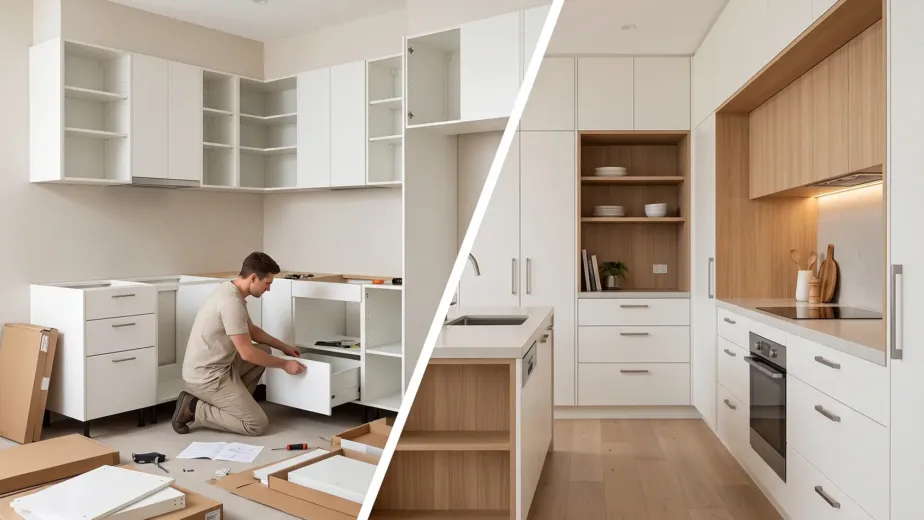
This is exactly where builders cut-to-size cabinet panels become a workflow advantage. Instead of building cabinetry on site, you shift that workload into a structured production environment.
2. Cost vs labour equation (what builders should actually measure)
Many builders compare cabinetry options by price only. Operationally, the correct comparison is:
Total Cost = Supply + Labour + Rework + Delay Risk
A cheaper option can become expensive if it adds labour hours or increases rework. Here’s how to think about it practically:
Labour time
If your site team spends hours measuring, cutting, adjusting, and re-fitting panels, you’re paying labour for fabrication rather than installation. With trade-ready cut-to-size joinery Melbourne, you’re paying for production precision so site labour stays focused on installation.
Rework and waste
On-site cutting creates offcuts, errors, and material waste. CNC processing reduces variability and waste because panels are cut accurately and consistently.
Delay cost
On-site cutting creates offcuts, errors, and material waste. CNC processing reduces variability and waste because panels are cut accurately and consistently.
If cabinetry pushes out benchtops, appliances, or final fit-off, the cost isn’t just hours—it’s sequencing. Delays can impact:
stone templating and install
electrical fit-off
plumbing fit-off
painting and finishing
handover dates
This is why builders often choose CNC cabinet panel cutting Melbourne services even if the “per-panel” cost looks higher than basic options. The stability pays off.
3. Workflow optimisation (how builders use cut-to-size correctly)
To get full value from CNC and cut-to-size services, treat cabinetry like a scheduled trade package, not a last-minute finish item.
Best practice builder workflow
Confirm kitchen/wardrobe layout early
Lock appliance specs (especially integrated units)
Finalise panel materials and edge banding choices
Submit cut-lists and drawings
Receive confirmation + scheduled production slot
Install as a structured package (not a site-built improvisation)
The benefit is predictability. The biggest advantage of flat pack joinery Australia trade-level supply is that it supports a repeatable job rhythm.
4. What “trade-grade flat pack” really means (not retail flat pack)
Builders often hear “flat pack” and think retail. Trade-level flat pack joinery Australia is different. The difference is not the concept—it’s the execution.
Trade-grade flat pack typically includes:
accurate CNC cutting and drilling patterns (where specified)
edge banding options suitable for job conditions
stronger material choices than standard consumer systems
panel consistency for multi-unit and repetitive runs
structured batching and production scheduling
In short: it’s not about “cheap cabinets.” It’s about efficient cabinet components built to install quickly.
5. Case-style scenario (how a builder uses CNC panels on a real schedule)
Here’s a realistic builder scenario:
Project:
3-townhouse build in Melbourne (repetitive kitchens + wardrobes)
Traditional approach:
on-site cutting/adjustments per unit
separate ordering cycles
variation risk across units
higher finishing time per townhouse
Cut-to-size / CNC approach:
one confirmed spec set for all units
batch production scheduling
consistent panel runs
faster install with fewer adjustments
Results builders typically see:
fewer site hours spent on fabrication tasks
more consistent installation outcomes
reduced rework and finishing defects
easier sequencing with benchtops and fit-off trades
This is why builders cut-to-size cabinet panels are especially valuable for multi-unit, repetitive work.
6. Scheduling strategy (how to avoid cabinetry becoming your bottleneck)
The best scheduling approach is simple:
Lock inputs early → schedule production → install as a package
Key scheduling inputs builders must confirm before production:
final measurements after plaster where required
appliance models and any integrated requirements
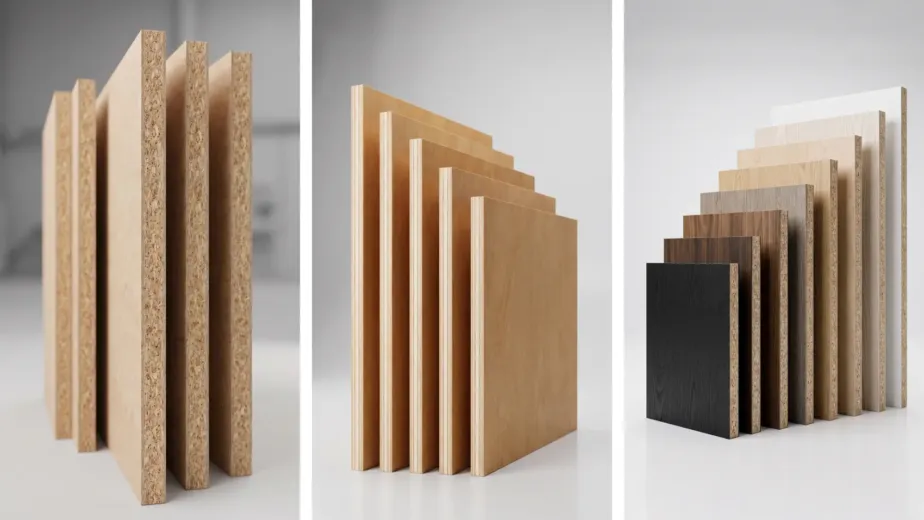
panel material selection (melamine / MDF / veneer / laminate, etc.)
edge banding needs
delivery/pick-up timing and storage plan on site
If you keep changing specs after submission, any production workflow will struggle. The easiest wins come when you make cabinetry “fixed” earlier in the build.
7. What to request from a CNC cut-to-size partner (builder checklist)
Not every supplier supports builder workflows properly. When you’re evaluating CNC cabinet panel cutting Melbourne, ask operational questions:
Production + turnaround
Do you confirm scheduling once the quote is approved?
Can you batch orders for multi-unit builds?
How do you manage repeat orders?
Consistency + quality control
Do you have a defined QC step before dispatch?
How do you reduce panel mismatch and finishing issues?
Trade practicality
Can you supply edge banding options consistently?
Can you support cabinet makers, carpenters, and site teams in parallel?
A builder doesn’t just need “cut panels.” A builder needs predictable outcomes.
8. Trade partnership model (why builders win with ongoing supply relationships)
The long-term advantage is not one order — it’s repeatability.
Ongoing builder partnerships often include:
prioritised production slots (for repeat workflows)
consistent material supply
faster re-order cycles
simplified quoting and approvals
clearer communication channels
If you’re doing multiple builds per month, a structured trade workflow with a reliable manufacturer becomes an operational asset.
This is where cut-to-size joinery Melbourne becomes part of your build system, not just a supplier decision.
9. When builders should use cut-to-size joinery (ideal use cases)
Builders get the strongest return from CNC cut-to-size services when:
projects have repetitive joinery scopes (multi-unit / townhouse)
site teams are stretched and labour time is limited
quality consistency matters across handovers
timelines are tight and sequencing is critical
you want to minimise dust/tools/fabrication on site
Even on premium builds, builders use CNC services to protect schedule integrity and installation quality.
10. The bottom line for builders
If you want cabinetry to be:
predictable
repeatable
install-ready
consistent across projects
…then shifting fabrication into a structured facility is a logical move.
A professional cut-to-size joinery Melbourne partner can reduce site labour pressure, minimise cutting errors, and support better scheduling. With the right workflow, CNC cabinet panel cutting Melbourne becomes an efficiency tool—not just a supply choice.
If you’re weighing options, treat this like a system decision: labour, risk, and schedule stability matter as much as price.
Builder FAQ
1. How does cut-to-size joinery improve builder workflow?
- It reduces on-site fabrication time, lowers measurement-related errors, and turns cabinetry into a planned installation activity rather than an on-site build task.
2. Is CNC cabinet panel cutting cost-effective for multi-unit projects?
- Yes. Batch processing improves repeatability, reduces labour hours per unit, and minimises rework across repeated layouts.
3. What does flat pack joinery Australia mean for trade projects?
- Trade-grade flat pack typically means CNC processed panels, edge banding options, and consistent production designed for builders, carpenters, and cabinet installers.
4. Can builders submit their own cut-lists?
- Yes. Builders can submit cut-lists and specifications so production can be quoted, confirmed, and scheduled properly.