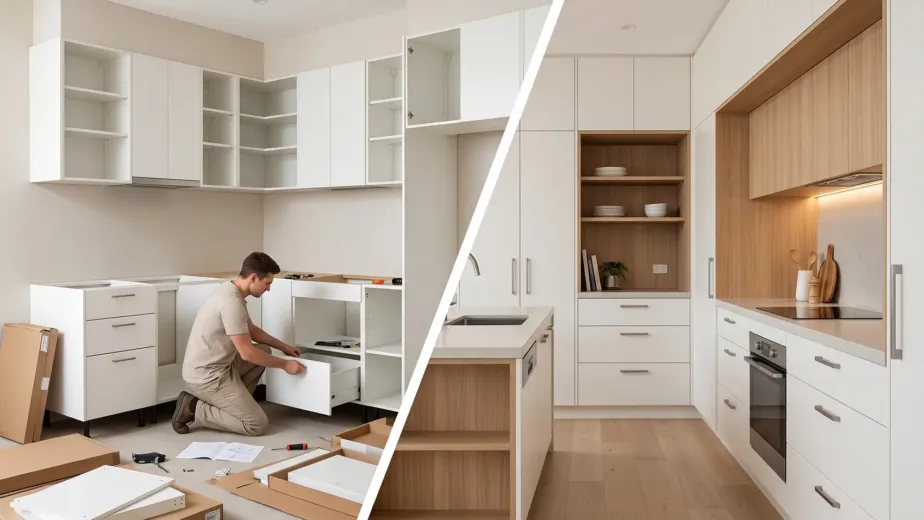
A full order book should be good news. But when cutting lists pile up, installers wait for components and skilled cabinetmakers spend most of their week feeding sheets through machinery, workshop growth can start creating more pressure than profit.
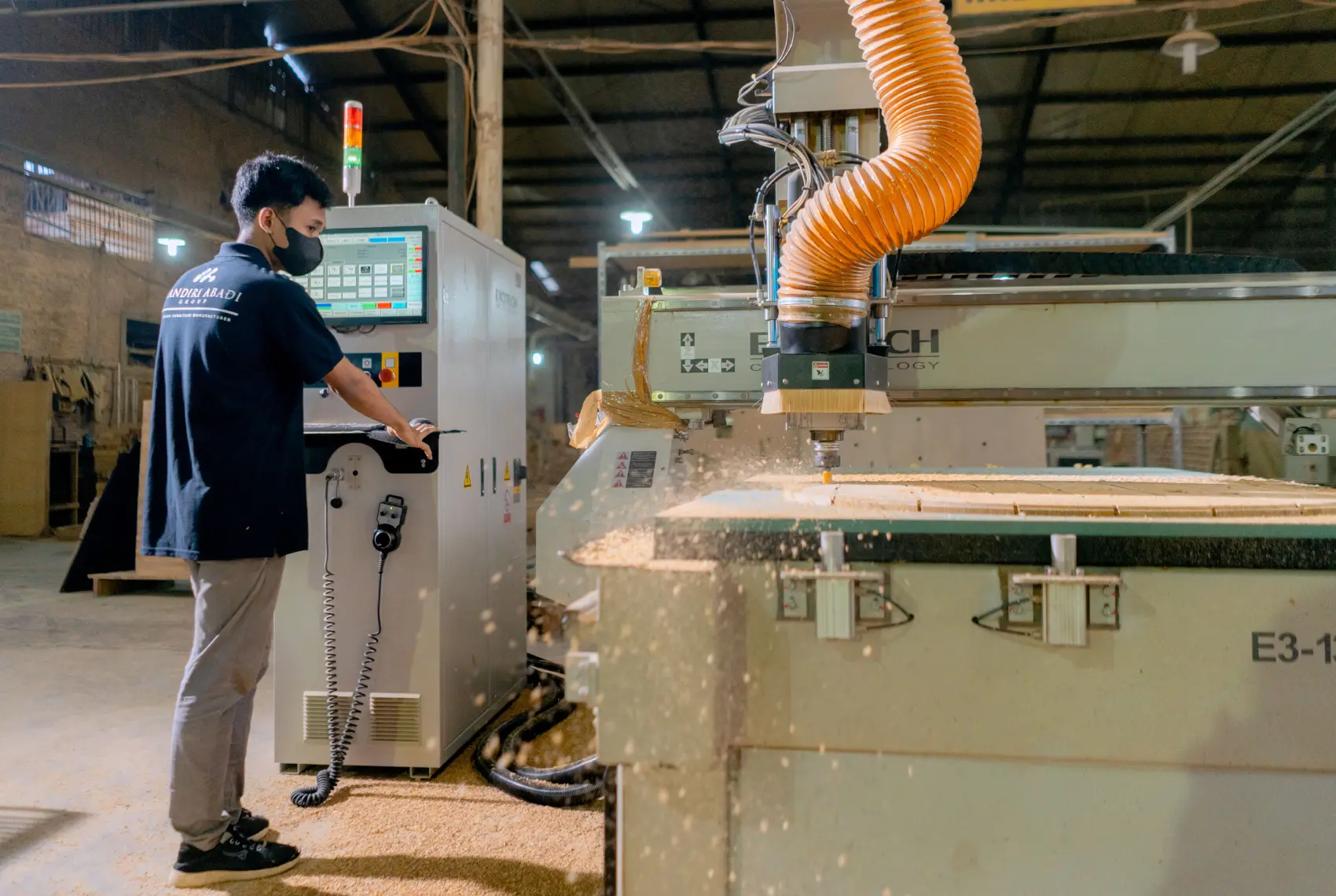
Buying a CNC machine may look like the obvious next step. It gives the business direct control over production, but it also brings finance repayments, software, tooling, extraction, maintenance, programming, floor-space requirements and the need to keep the machine consistently productive.
Outsourcing creates a different model. The cabinetmaker keeps control of design, client communication, assembly and installation while a specialist supplier handles agreed manufacturing stages.
Neither option is automatically right for every business. The better choice depends on order volume, job mix, available capital, labour, workshop space, deadlines and the quality of the production information.
This guide compares in-house production with using a CNC cutting service Melbourne cabinetmakers, builders and joinery businesses can engage for regular work, one-off jobs or production overflow.
The Real Decision Is Not Simply “Buy or Outsource”
The decision often appears straightforward:
- Buy machinery and produce everything internally
- Send every panel to an external manufacturer
In practice, many businesses operate somewhere between those two positions.
A cabinetmaker may manufacture standard work internally but outsource large panel batches. A builder may order complete cut-to-size components because the business does not operate a cabinet workshop. An established joinery company may use external production only when its machinery reaches capacity or requires maintenance.
The first question should therefore be:
- Which parts of our production process should remain in-house, and which parts could another workshop complete more efficiently?
Depending on the supplier and agreed scope, outsourced production may include:
- Panel optimisation
- Sheet cutting
- CNC routing
- Edge banding
- Hinge drilling
- Drawer-runner drilling
- Shelf-pin drilling
- Connector machining
- Grooves and rebates
- Component labelling
- Flat-pack preparation
- Packaging
- Delivery to the workshop or project site
A business does not need to outsource its design, client relationship or installation simply because it outsources manufacturing.
When In-House CNC Production Makes Sense
Owning and operating CNC machinery can make commercial sense when a workshop has enough suitable work to keep the equipment productive.
In-house production may suit businesses that have:
- Consistent monthly panel volume
- Sufficient workshop floor space
- Reliable material-handling systems
- Trained operators or the capacity to train them
- Production software that connects design with manufacturing
- Funds for machinery, tooling and supporting equipment
- A maintenance and breakdown plan
- Enough work to justify fixed operating costs
- A long-term plan to expand manufacturing capacity
The main advantage is direct production control. The workshop can prioritise jobs, respond to internal changes and manage the complete manufacturing sequence without waiting for an external production slot.
However, control only delivers value when the business can operate the equipment efficiently and consistently.
When Outsourced CNC Cutting Makes Sense
Outsourcing may suit businesses that want to increase production without immediately adding machinery, floor space or another manufacturing shift.
A specialist cabinet panel cutting Melbourne service may help when a business:
- Has more work than its current workshop can process
- Wants to accept a larger project without buying new machinery
- Needs CNC accuracy for selected components
- Requires cutting, edging and drilling as one coordinated package
- Experiences seasonal or irregular production peaks
- Needs support while its own machine undergoes servicing or repair
- Wants to focus skilled labour on assembly, finishing and installation
- Has limited workshop space
- Is testing a new service or market
- Needs components for a one-off project
- Wants to reduce manual panel processing
- Requires repeated parts across multiple units
The business still needs complete drawings, confirmed dimensions and accurate manufacturing information. Outsourcing does not remove production planning. It changes who performs the machining.
Comparing the True Cost of Both Options
A CNC purchase price does not represent the full cost of bringing production in-house. Likewise, an outsourced price per panel does not represent the complete value of external manufacturing.
A proper comparison should include every cost affected by the decision.
| Cost area | In-house production | Outsourced production |
|---|---|---|
| Machinery | Purchase, finance or lease costs | Included within the supplier’s production price |
| Workshop space | Requires dedicated operating and handling areas | May release space for assembly, storage or other work |
| Software | Licences, updates and integration | Supplier manages its production system |
| Labour | Operators, programmers and material handling | Internal labour prepares and checks production information |
| Tooling | Purchase, replacement and sharpening | Generally built into supplier pricing |
| Maintenance | Servicing, repairs and downtime | Supplier manages its own equipment |
| Extraction and power | Workshop infrastructure and operating costs | Generally included within outsourced pricing |
| Material handling | Internal unloading, storage and sheet movement | Depends on who supplies the board |
| Quality control | Managed entirely in-house | Shared through agreed specifications and receiving checks |
| Transport | Internal movement may be simpler | Collection or delivery costs apply |
| Capacity | Limited by equipment, labour and shifts | Can provide flexible external capacity |
| Scheduling | Direct internal control | Requires booking, lead-time and delivery coordination |
A panel that arrives cut, edged, drilled and labelled may replace several internal production steps. At the same time, outsourcing may create freight, checking, packaging and communication costs that need to be included.
Machinery Investment Goes Beyond the CNC Machine
Businesses considering in-house CNC production should calculate the complete manufacturing system.
Potential requirements include:
- CNC router or nesting machine
- Edge bander
- Dust extraction
- Air supply
- Electrical upgrades
- Material-handling equipment
- Sheet and offcut storage
- Tooling
- Measuring and calibration equipment
- Design-to-manufacturing software
- Barcode or labelling systems
- Safety systems
- Operator training
- Maintenance contracts
- Spare parts
- Additional insurance
- Suitable access for sheet deliveries
The workshop may also need layout changes to move sheets safely between storage, cutting, edging, drilling and assembly areas.
A machine can increase capacity, but only if the surrounding production system supports it.
Labour Is Often the Deciding Factor
Cabinetmaking businesses do not only compete for jobs. They also compete for skilled labour.
When experienced cabinetmakers spend large portions of their time on repetitive panel processing, the business should consider whether those hours would create more value elsewhere.
Skilled team members may contribute more by focusing on:
- Site measurement
- Detailed design
- Client communication
- Complex assembly
- Quality control
- Installation
- Custom detailing
- Problem-solving
- Project supervision
- Apprentice development
Using outsourced CNC cutting Melbourne services may allow a business to move labour towards these higher-value responsibilities.
However, outsourcing still requires capable people to prepare drawings, verify dimensions, nominate hardware, check revisions and inspect delivered components. It changes the labour requirement rather than eliminating it.
Workshop Capacity Is More Than Floor Area
A busy workshop may have enough physical space for another machine but lack the operational capacity to use it well.
Capacity constraints can appear in:
- Design and drafting
- Cutting-list preparation
- Sheet storage
- Material handling
- Edge banding
- Hardware drilling
- Assembly
- Finished-cabinet storage
- Loading and delivery
- Installation scheduling
For example, increasing cutting speed may only move the bottleneck to the edge bander or assembly area. Before investing in machinery, map the complete production flow and identify the stage that actually limits output.
Outsourcing can provide value when the main bottleneck sits in panel processing. It offers less benefit if the real delay occurs during approvals, installation or site coordination.
Cutting Accuracy Depends on More Than the Machine
Modern CNC equipment can produce repeatable components from correct manufacturing data. But no machine can correct an incorrect cabinet size, outdated hardware schedule or unclear panel orientation.
Accuracy depends on:
- Verified project measurements
- Correct finished-panel dimensions
- Confirmed board thickness
- Clear grain direction
- Accurate edge specifications
- Current hardware details
- Correct drilling coordinates
- Defined panel orientation
- Controlled file revisions
- Proper machine setup and calibration
- Suitable tooling
- Inspection before dispatch
When comparing suppliers for cut-to-size joinery Melbourne, ask how they receive, check and process production information. Also clarify who holds responsibility for cabinet design, dimensions and approvals.
Edge Banding Should Form Part of the Comparison
Cutting panels in-house while sending them elsewhere for edging may create additional handling and transport. For that reason, businesses should compare complete production pathways rather than isolated services.
Consider whether the external supplier can coordinate:
- Board cutting
- Matching or contrasting edge selection
- Different edge thicknesses
- Visible and concealed edges
- Grain direction
- Finished panel dimensions
- Door and drawer-front edging
- Shelf edging
- Component labelling
A coordinated cut-and-edge order may reduce internal handling. However, the cutting list must identify the correct edge product and show exactly which sides require edging.
Hardware Drilling Can Save Time or Repeat an Error
Pre-drilled components can reduce manual setup during assembly. They can also repeat an incorrect hole pattern across an entire batch if the supplied information is wrong.
Before including hardware drilling in an outsourced order, confirm:
- Hinge manufacturer and product code
- Hinge-cup and mounting-plate requirements
- Drawer-runner model and length
- Shelf-pin diameter and spacing
- Connector type
- Hole diameter and depth
- Blind holes versus through-holes
- Left-hand and right-hand panels
- Drilling face
- Reference edges
- Cabinet and component labels
If the business changes hardware frequently, it needs a controlled method for keeping schedules, drawings and CNC information aligned.
What Happens When Production Demand Suddenly Increases?
A workshop may handle normal demand comfortably and struggle only when several projects reach production together.
Common pressure points include:
- Multiple kitchen installations in the same month
- Apartment or townhouse packages
- Builder programmes that move forward at short notice
- Commercial fit-out deadlines
- Delayed approvals releasing several jobs together
- Staff leave or illness
- Machinery servicing
- Urgent replacement components
- Rework from another stage of the project
Production overflow provides a strong case for outsourcing without permanently changing the business model.
A cabinetmaker can retain normal internal manufacturing and use an external supplier when workload exceeds practical capacity. This approach may reduce rushed work, overtime and installation delays.
To make overflow outsourcing work, establish the process before the workshop becomes overloaded. Agree on file formats, material supply, component labels, checking responsibilities, lead times and delivery arrangements in advance.
One-Off Projects and Repeat Work Need Different Approaches
One-Off and Highly Custom Work
A one-off reception counter, unusual curved component or complex residential cabinet may require close design and production coordination.
Outsourcing can still work, but the business should confirm:
- Whether the supplier accepts the required geometry
- Which files are needed
- Whether prototypes or samples are advisable
- Who resolves manufacturing questions
- Which tolerances apply
- Whether specialist tooling is required
- How changes will be approved
Highly unusual work may remain easier to control internally if the workshop has the right capability and the job requires constant adjustment.
Repeated Cabinet Modules
Repeat work often suits CNC production because the same approved components can be manufactured consistently across several units.
Examples include:
- Apartment kitchens
- Townhouse developments
- Builder-standard wardrobes
- Office storage
- Retail fixtures
- Laundry packages
- Repeated vanity units
- Standard cabinet ranges
Before releasing a full batch, consider producing and checking a sample cabinet. A repeated mistake can affect every unit, while an approved sample can confirm assembly, hardware, edge treatment and labelling.
Material Supply and Handling
The outsourcing arrangement should clearly identify who supplies the board.
If the CNC provider supplies it, confirm:
- Manufacturer and product range
- Colour and product code
- Thickness
- Surface finish
- Grain direction
- Batch considerations
- Edge-product availability
- Charged sheet quantities
- Treatment of offcuts
If the cabinetmaker supplies the board, clarify:
- Delivery arrangements
- Sheet condition
- Labelling
- Storage
- Damage responsibility
- Minimum usable sizes
- Handling of leftover material
- Collection of offcuts
Material damage can occur during loading, transport, storage or machining. Define responsibilities before the job begins.
Delivery and Project Timing
Outsourcing adds another stage to the programme, but it may shorten total production time when the internal workshop is already full.
A realistic schedule should include:
- Time to finalise drawings
- Production-file preparation
- Supplier review
- Material procurement
- Manufacturing lead time
- Quality checks
- Packaging
- Delivery or collection
- Incoming inspection
- Assembly
- Installation
Do not book installation only around an estimated cutting date. Confirm when the complete, checked order will be available.
For Melbourne projects, transport planning may need to consider:
- Workshop location
- Delivery suburb
- Site or factory delivery
- Vehicle access
- Apartment loading requirements
- Delivery windows
- Panel and cabinet size
- Weather protection
- Unloading labour
- Secure storage
Urgent production provides little value if the components cannot reach the correct location safely and on time.
Quality Control Does Not End When You Outsource
The cabinetmaker or builder should still check the supplied components before assembly or installation.
An incoming inspection can review:
- Panel count
- Part labels
- Material and colour
- Board thickness
- Finished dimensions
- Grain direction
- Edge colour and thickness
- Edge placement
- Drilling faces
- Hole positions
- Grooves and cut-outs
- Surface damage
- Packaging damage
- Left-hand and right-hand components
- Drawing revision
Complete this check early enough to resolve a problem before installation.
Do not leave panels packaged until the day they are required on site. A missing or incorrect component identified during installation can affect several trades and the wider project programme.
Protecting Client Relationships When Production Is Outsourced
Some cabinetmakers worry that outsourcing will weaken their control over the client experience. That depends on how they manage the arrangement.
The cabinetmaker can remain responsible for:
- Client communication
- Site measurement
- Design
- Material selection
- Quoting
- Project management
- Assembly
- Installation
- Final quality
- Warranty communication
The external supplier operates as a production partner rather than the client-facing contractor.
Before working together, clarify confidentiality, file ownership, branding, packaging, direct communication and whether the supplier may contact the end client.
Questions to Ask a CNC Cutting Supplier
A suitable supplier should fit your workflow, not simply provide the lowest panel price.
Ask:
- Which materials and thicknesses do you process?
- Do you provide material, or can we supply our own?
- Do you offer cutting, edging and drilling?
- Which edge types and thicknesses are available?
- Which file formats do you accept?
Can you work from a cutting list, drawings or CNC-ready data? - Do you check submitted files, and what does that check include?
- Who remains responsible for design and dimensions?
- Can you label components by room and cabinet?
- How do you handle mirrored parts?
- Can you manufacture a sample cabinet?
- What are your typical production lead times?
- How do you manage urgent or overflow work?
- Do minimum order quantities apply?
- Can you manage repeated multi-unit components?
- How do you package finished panels?
- Do you offer collection or Melbourne delivery?
- How do you handle missing, damaged or incorrect parts?
- Can you keep approved specifications for repeat orders?
- What information do you need to provide an accurate quote?
The answers should help you assess operational compatibility, not only price.
A Practical Cost Comparison
Before deciding, compare a representative month of work under both production models.
Calculate the In-House Cost
Include:
- Machinery finance or depreciation
- Workshop rent allocated to
- production space
- Software
- Electricity
- Extraction
- Tooling
- Maintenance
- Operator wages
- Programming time
- Material handling
- Waste
- Rework
- Quality checking
- Downtime allowance
- Insurance
- Internal transport
Calculate the Outsourced Cost
Include:
- Supplier quote
- File preparation
- Internal checking
- Material supply
- Cutting and edging
- Hardware drilling
- Packaging
- Freight or collection
- Incoming inspection
- Assembly
- Rework allowance
- Communication and coordination
Compare the Business Impact
Also consider:
- Jobs accepted or declined
- Installation delays
- Overtime
- Cash tied up in machinery
- Workshop space released
- Ability to handle demand peaks
- Time available for quoting and client management
- Dependence on one supplier
- Long-term growth plans
The cheaper production method on paper may not deliver the better business result. A method that releases labour, protects deadlines and supports more profitable work may justify a higher direct component cost.
Three Common Project Scenarios
Scenario 1: A Cabinetmaker with Consistent High Volume
A workshop produces a steady volume of similar cabinetry throughout the year. It has suitable space, trained staff and enough work to keep machinery productive.
In-house CNC production may offer strong long-term control. The business may still use an external supplier during breakdowns, major project peaks or specialist work.
Scenario 2: A Small Workshop with Irregular Demand
A cabinetmaker completes custom projects but does not have predictable panel volume every month. Buying machinery could create high fixed costs during quieter periods.
Outsourcing may allow the business to access CNC-cut, edged and drilled components only when required while keeping internal operations focused on design, assembly and installation.
Scenario 3: A Builder Managing Several Developments
A builder requires cabinetry for multiple properties but does not operate a dedicated cabinet-manufacturing workshop.
Using trade cabinet components Melbourne supply may provide a more structured path than setting up a manufacturing operation. The builder must still ensure that qualified people manage cabinet design, approvals, assembly, installation and trade coordination.
A Hybrid Model Often Provides the Most Flexibility
The decision does not need to remain fixed forever.
A hybrid model may involve:
- Cutting urgent or highly custom work internally
- Outsourcing large panel batches
- Sending overflow jobs to an external supplier
- Outsourcing edging while retaining assembly
- Ordering pre-drilled carcass components
- Producing feature pieces internally
- Using external manufacturing during machine maintenance
- Outsourcing repeated modules for multi-unit work
This approach can provide direct control where it matters while giving the business additional capacity when demand rises.
The challenge is consistency. Internal and outsourced components must follow the same material, edge, hardware, labelling and quality standards.
Signs That Outsourcing May Be Worth Testing
Consider trialling external CNC cabinet manufacturing Melbourne support if:
- Panel processing regularly delays assembly
- Skilled cabinetmakers spend too much time on repetitive cutting
- Overtime has become normal
- The workshop declines work because of production capacity
- Large projects disrupt smaller profitable jobs
- Machinery investment would place pressure on cash flow
- Available floor space limits expansion
- Machine breakdowns create serious scheduling risk
- Project volume changes significantly from month to month
- Repeated components require more consistent machining
- Installation teams regularly wait for production
- The business wants to test a new market before investing in equipment
A controlled trial provides better information than a decision based only on supplier price lists or machinery brochures.
How to Test an Outsourced CNC Partner
Start with a clearly documented project that represents normal work but does not place a critical deadline at risk.
Assess:
- Quotation clarity
- Questions asked before
- production
- File compatibility
- Material availability
- Communication
- Lead-time reliability
- Panel accuracy
- Edge quality
- Drilling
- Component labelling
- Packaging
- Delivery
- Response to discrepancies
Record assembly time and compare it with your normal process. Also track the internal hours spent preparing files, checking information and inspecting the order.
One successful job does not prove that every project should be outsourced. It shows whether the supplier and process deserve a larger trial.
Information to Prepare Before Requesting a Quote
A supplier can provide a more useful quotation when the enquiry includes:
- Project name
- Business name
- Project location
- Required completion date
- Cabinet drawings
- Cutting list
- Material schedule
- Board thickness
- Grain direction
- Edge-banding schedule
- Hardware schedule
- Drilling requirements
- Grooves, rebates and cut-outs
- Component quantities
- Labelling requirements
- Packaging requirements
- Collection or delivery postcode
- Expected repeat volume
- Whether materials are supplied
- Current drawing revision
If information is still under development, identify which items are confirmed and which remain preliminary.
Outsourced CNC Production Checklist
Before releasing an order, confirm that:
- Final cabinet dimensions have been approved
- Site measurements have been verified
- Materials and board thicknesses are confirmed
- Grain direction is shown
- Finished and raw dimensions are clearly distinguished
- Edge products and edge locations are specified
- Hardware product codes are confirmed
- Hole diameters and depths are included
- Left-hand and right-hand components are identified
- Grooves, rebates and cut-outs are shown
- Appliance information is current
- Components use consistent names and part numbers
- Drawings and cutting lists use the same revision
- Superseded documents have been removed
- Packaging and labelling requirements are documented
- Delivery or collection arrangements are confirmed
- Internal receiving and inspection responsibilities are assigned
- Assembly and installation dates allow time for checking
Cut-to-Size Trade Support from Sagar Cabinets
Sagar Cabinets provides cut-to-size joinery Melbourne cabinetmakers, builders, carpenters and trade businesses can use for planned production, individual projects and additional manufacturing capacity.
Based in Dandenong South, Sagar Cabinets can discuss panel cutting, edge banding, material supply and CNC machining requirements for Melbourne residential and commercial joinery projects. The available scope, materials, file requirements and production timing should be confirmed for each order.
You can retain control of the design, client relationship, assembly and installation while arranging agreed manufacturing stages through an external production partner.
Need More Production Capacity Without Adding Another Machine?
If your workshop is approaching capacity or an upcoming project requires additional panel production, send Sagar Cabinets your drawings, cutting list, material details, machining requirements, quantities and delivery location.
The team can review the submitted information and discuss whether outsourced CNC production suits the job.
Frequently Asked Questions
Is it cheaper to outsource CNC cutting or buy a CNC machine?
- The answer depends on production volume, machinery cost, finance, workshop space, labour, software, tooling, maintenance and how consistently the machine will operate. Outsourcing may suit variable or growing demand, while in-house machinery may suit businesses with stable volume and sufficient supporting resources.
When should a cabinetmaker outsource CNC cutting?
- Outsourcing may help when internal machinery reaches capacity, a workshop receives a large project, equipment requires maintenance or the business wants to reduce repetitive panel processing. It can also suit businesses that lack enough consistent volume to justify machinery investment.
Can I outsource CNC cutting for one project?
- A supplier may accept one-off projects depending on its service model, order requirements and production capacity. Provide complete drawings, quantities, material information and required timing so the supplier can assess the job.
Can an external supplier cut, edge and drill cabinet panels?
- Some cut-to-size suppliers offer coordinated cutting, edge banding and hardware drilling. Confirm the available scope and provide exact material, edge and hardware specifications before production.
What files does a CNC cutting service need?
- Requirements vary between suppliers. You may need to provide cabinet drawings, cutting lists, panel schedules, hardware schedules, material details and approved CNC-ready files. Ask which formats the supplier accepts before preparing the order.
Who is responsible if the cutting list is wrong?
- Responsibility depends on the agreed scope. Where a supplier manufactures from customer-approved information, the customer may remain responsible for design, dimensions and specifications. Confirm checking and approval responsibilities before production.
Can outsourced CNC cutting help with production overflow?
- Yes. A workshop can use external manufacturing during high-demand periods, staff shortages, machinery servicing or major projects. Set up the supplier relationship and file process before the workload becomes urgent.
How do I compare CNC cutting quotes?
- Compare the full scope rather than only the cutting price. Check whether the quotation includes material, optimisation, edging, drilling, labelling, packaging, delivery, GST and rework conditions.
Can outsourced cabinet panels be delivered ready for assembly?
- Depending on the service, panels may arrive cut, edged, drilled and labelled for assembly. Confirm hardware machining, connectors, grooves, packaging and assembly responsibilities before placing the order.
Should cabinetmakers outsource all production?
- Not necessarily. Some businesses benefit from keeping all manufacturing in-house, while others outsource selected stages or production overflow. A hybrid model may offer greater flexibility when project volume changes.
How can I check an outsourced CNC supplier before sending a large order?
- Begin with a representative trial project. Review communication, documentation, accuracy, edge quality, drilling, labelling, packaging, delivery and the supplier’s response to any discrepancy before expanding the relationship.