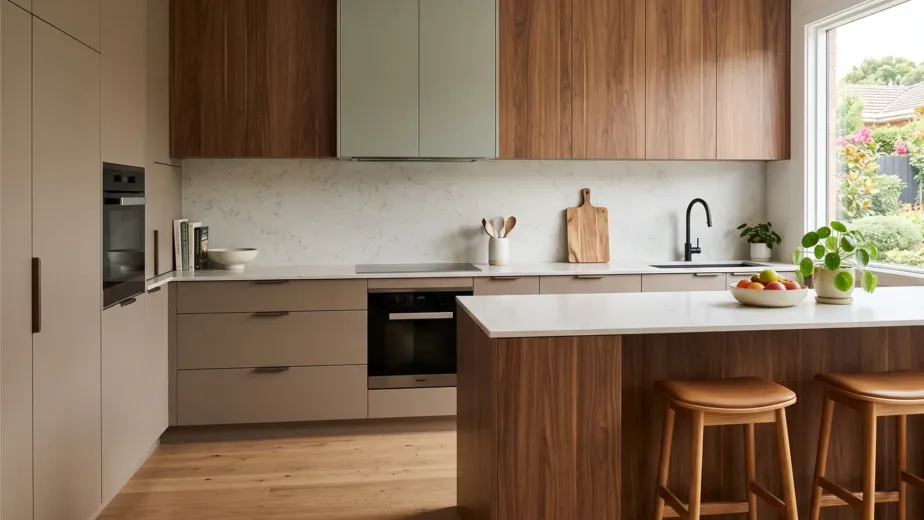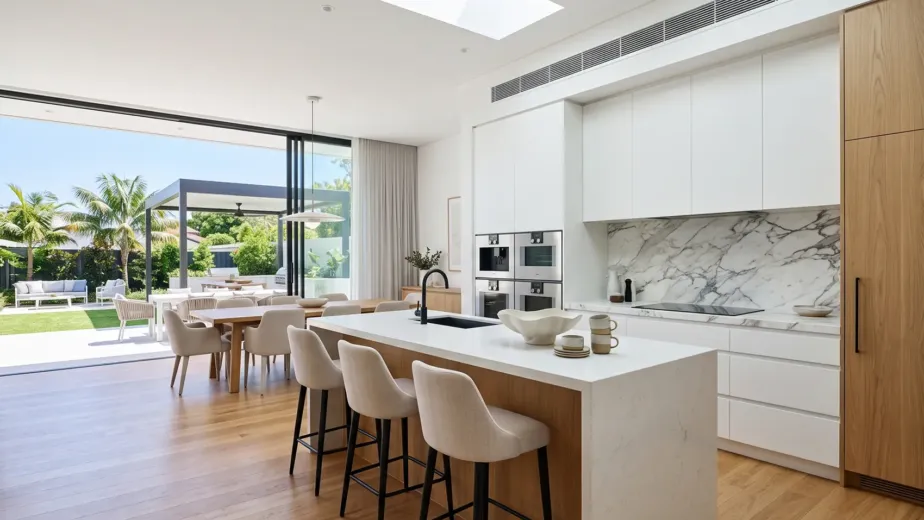
Your kitchen looks tired, but does that mean every cabinet needs to go?
For many Melbourne homeowners, this is the first difficult decision in a kitchen renovation. Replacing only the cabinet doors sounds faster and more affordable. However, fresh doors cannot correct a poor layout, swollen cabinet boxes, failing drawers or storage that no longer suits the household.
At the same time, removing structurally sound cabinetry simply because the colour feels dated may create unnecessary cost and disruption.
The right decision depends on what is actually wrong with the kitchen. Before choosing a cosmetic update or complete kitchen cabinet replacement in Melbourne, you need to assess the cabinet structure, layout, hardware, storage, services and long-term plans for the home.
This guide explains the three main renovation options, the factors that affect cost and the warning signs that suggest your kitchen needs more than new doors.
The Short Answer: Should You Replace the Doors or the Cabinets?
Replacing the doors may work when the cabinet boxes remain solid, the existing layout functions well and the main problem is the kitchen’s appearance. New fronts, handles and selected hardware can refresh the room without removing every cabinet.
A full cabinet replacement usually makes more sense when the cabinetry has water damage, weak construction, poor storage or an inefficient layout. It also becomes the better option when you want to move appliances, add an island, change the benchtop height or create a different kitchen configuration.
Some kitchens fall between these two situations. They may benefit from new doors combined with selected cabinet repairs, upgraded drawers or additional storage.
The important point is that new doors improve the surface you see. They do not automatically improve the cabinet structure, internal layout or way the kitchen functions.
Start by Assessing the Existing Kitchen
Do not begin the decision with colour samples or door profiles. Start with the condition and performance of the current kitchen.
Open every door and drawer. Look inside the sink cabinet, under the benchtop and around appliances. Check whether shelves sag, hinges move, drawer runners stick or the cabinet boxes have started separating at the joints.
Then consider how the kitchen works during a normal day. A kitchen may remain structurally sound while creating constant frustration because the pantry is too small, the dishwasher blocks a walkway or important items sit far from the areas where they are used.
Your assessment should cover three main questions:
- Are the cabinet boxes strong, dry and properly fixed?
- Does the current layout support the way your household cooks and moves?
- Would new doors solve the main problem, or only hide it temporarily?
A cabinet maker can help inspect the kitchen, but your daily experience also matters. Make a note of the issues you repeatedly notice rather than judging the kitchen only by how it looks.
Check the Cabinet Boxes First
Cabinet boxes, also called carcasses, form the structure behind the doors and drawer fronts. If you plan to keep them, they must provide a stable base for new fronts and hardware.
Look for swelling, softness or discolouration around sinks, dishwashers and plumbing. Moisture can damage particleboard or MDF-based cabinetry, particularly when leaks continue unnoticed.
Check the cabinet floors and shelves for sagging. Inspect the corners and joints to see whether panels remain firmly connected. Doors that no longer sit square may indicate a hinge problem, but they can also point to movement in the cabinet structure.
The backs of the cabinets should remain secure, and wall units should feel firmly fixed. If a cabinet moves when you open the door, new fronts will not correct the underlying installation problem.
Minor local damage may sometimes be repairable. Widespread swelling, movement or deterioration usually makes full replacement more practical.
Decide Whether the Layout Still Works
The existing layout is one of the strongest factors in this decision. Replacing doors keeps the cabinet positions largely unchanged, so the current arrangement needs to work well.
Think about the relationship between the sink, cooktop, refrigerator, pantry and preparation areas. Consider whether more than one person can use the kitchen without blocking another person’s path.
Ask yourself whether the kitchen provides enough clear benchtop space and whether the most frequently used items sit near the correct work areas. Plates should be reasonably close to the dishwasher, cookware should be near the cooktop and bins should be accessible from the food-preparation area.
Also examine the traffic around the kitchen. An open dishwasher should not block the main walkway. A refrigerator door should open without trapping someone between the appliance and an island. Cabinet doors and drawers should not collide at corners.
If the basic layout works, retaining the cabinet boxes may remain an option. If the kitchen feels awkward every day, new doors will give the same layout a different appearance without solving its problems.
Review Storage, Not Just Cabinet Quantity
A kitchen can contain many cabinets and still offer poor storage. Deep shelves, narrow drawers and inaccessible corners often waste more space than homeowners realise.
Review where you store cookware, crockery, food, small appliances and cleaning products. If frequently used items live on the benchtop because the cabinets do not provide suitable storage, the internal arrangement may need more than a cosmetic update.
Modern custom kitchen cabinets in Melbourne can use wider drawers, internal organisers, vertical tray storage, integrated bins and better-designed pantry systems. These features can make existing room dimensions work harder.
However, not every old kitchen needs specialised accessories. The goal is to create storage that supports the household’s actual habits, not to add mechanisms that provide little daily value.
If the cabinet boxes are sound and the storage works reasonably well, replacing the fronts may be enough. If you need different cabinet widths, more drawers or a new pantry arrangement, complete replacement provides greater flexibility.
Three Kitchen Cabinet Renovation Options
Most kitchens fall into one of three renovation categories. Understanding these options can help you request quotes for comparable scopes instead of comparing one cosmetic update with one complete rebuild.
Option 1: Replace the Doors and Drawer Fronts
This option keeps the existing cabinet boxes while replacing the visible doors and drawer fronts. The project may also include new handles and adjustments to the hinges.
Door replacement can suit a kitchen where the layout works, the cabinetry remains structurally sound and the household mainly wants a different appearance.
It can change the colour, finish and style of the room without removing every cabinet. Depending on the existing cabinetry, homeowners may choose flat fronts, routed profiles, timber-look surfaces, matte finishes or another compatible option.
However, matching new fronts to old cabinet boxes requires careful measurement. The door dimensions, hinge positions, panel thicknesses and clearances must suit the existing construction.
Visible cabinet ends, kickboards and fillers also require attention. New doors may look disconnected from the kitchen if the old external panels remain in a different colour or finish. The scope should clarify which visible parts will change and which will stay.
Replacing doors alone normally does not change:
- The kitchen layout or cabinet positions
- Internal cabinet widths and depths
- Existing shelves and drawer boxes
- Appliance locations
- Plumbing and electrical services
- The condition of the original cabinet structure
Door replacement is most successful when the improvement you want is genuinely cosmetic.
Option 2: Update the Doors and Selected Cabinet Components
Some kitchens need more than new fronts but do not require complete removal.
This middle option may include replacing doors and drawer fronts while repairing selected cabinets, changing hardware or adding practical internal features. It may also involve replacing damaged end panels, kickboards or a small number of cabinet units.
For example, you might keep most cabinet boxes while replacing a damaged sink cabinet. Old hinged cupboards may receive drawers where the existing construction allows it. Hinges and runners may also be upgraded if the cabinet dimensions suit current hardware.
This approach can make sense when the kitchen works well overall but contains a few local problems. It allows the renovation to target weak or inconvenient areas without rebuilding the entire room.
The feasibility depends on the original construction. Modifying existing cabinets can require more labour than expected, especially when new components must fit around old dimensions that are not standard or square.
Ask the cabinet maker to explain whether each proposed modification offers real value. In some cases, extensive alterations to old cabinets can approach the effort of manufacturing new ones while still leaving much of the original kitchen in place.
Option 3: Replace All Kitchen Cabinets
A full replacement removes the old cabinetry and creates a new system for the room. It gives you the greatest freedom to improve the layout, storage, appliance positions and overall appearance.
This option generally suits kitchens with damaged cabinet boxes, failing hardware or a layout that no longer works. It also makes sense when the renovation includes new appliances, relocated plumbing, a different benchtop configuration or an island.
New cabinetry can be designed around the room rather than copied from the existing kitchen. Cabinet widths, drawer heights and pantry arrangements can match the household’s needs. The design can also account for current appliance specifications, waste systems and electrical requirements.
A complete kitchen cabinet renovation in Melbourne may involve other trades. Removing cabinetry can expose walls, flooring, plumbing and electrical services that require repair or relocation. Benchtops, splashbacks and appliances may also need replacement or reinstallation.
The larger scope costs more than replacing fronts, but it can provide better long-term value when the existing kitchen has structural and functional problems.
A Simple Comparison of the Three Options
| Renovation option | Best suited to | Main limitation |
|---|---|---|
| New doors and drawer fronts | Structurally sound kitchens with a good layout and dated appearance | It does not improve the cabinet structure, layout or internal storage |
| New fronts with selected upgrades | Kitchens with sound general construction but a few damaged or inconvenient areas | Extensive modifications can become complicated and reduce the expected saving |
| Full cabinet replacement | Damaged, inefficient or poorly planned kitchens that require major improvement | It involves a larger budget, longer programme and more trade coordination |
The lowest initial price does not always provide the best result. The right choice is the least extensive option that properly addresses the kitchen’s real problems.
When Replacing Kitchen Doors Can Work Well
New doors may provide a worthwhile update when the existing cabinet boxes are dry, stable and properly fixed. The kitchen should also have a layout that the household wants to keep.
This approach works best when the cabinet openings remain reasonably square and consistent. New fronts need accurate dimensions and suitable hinge positions, so poorly aligned cabinets may require additional adjustment.
The visible sides of the cabinetry should also suit the planned finish. If the external panels, fillers and kickboards look worn or clash with the new fronts, the scope may need to include replacements or matching treatments.
Benchtops and splashbacks often influence the decision. If you plan to keep both, new doors can refresh the kitchen without disturbing these surfaces. If the benchtop also needs replacement, check how removing it may affect the old cabinets. Some existing boxes may not tolerate the work involved in removing and installing a heavy benchtop.
Door replacement is likely to work when:
- The existing layout remains practical for your household.
- Cabinet boxes show no significant water or structural damage.
- Doors and drawer fronts cause most of the visual dissatisfaction.
- Appliance positions will remain unchanged.
- Internal storage already meets your needs.
- Visible panels can be retained or matched successfully.
A site assessment can confirm whether the old cabinets provide a suitable foundation for the proposed update.
When New Doors Are Unlikely to Be Enough
Fresh doors can make a kitchen look newer, but they cannot repair every problem. If the underlying cabinetry has reached the end of its useful life, keeping it may create further expense later.
Water damage provides one of the clearest warning signs. Swollen cabinet floors, soft panels, peeling surfaces and persistent musty smells can indicate moisture damage. The source of the leak must be repaired, but affected cabinets may also require replacement.
Loose cabinets, sagging shelves and separating joints suggest that the structure has weakened. New doors may place additional weight on cabinet sides that already struggle to hold the existing hinges.
Poor layout is another strong reason to consider full replacement. If the refrigerator blocks a doorway, the pantry sits too far from the preparation area or the kitchen lacks practical benchtop space, changing the fronts will preserve those problems.
You should also question door replacement when the renovation requires significantly different appliances. A larger refrigerator, wider oven or integrated dishwasher may not fit the existing openings. Modifying several cabinets to suit new appliances can make the project more complex than expected.
Other warning signs include:
- Drawers that regularly stick, drop or leave limited usable space
- Cabinets that no longer sit level or square
- Extensive damage around the sink or dishwasher
- Insufficient ventilation for proposed appliances
- A layout that creates collisions or narrow walkways
- Inadequate storage despite having many cabinets
- Cabinet dimensions that prevent useful hardware upgrades
- Major changes to plumbing, electrical services or appliance positions
When several of these issues appear together, a full kitchen cabinet replacement in Melbourne may provide a more reliable outcome.
What Affects the Cost?
The difference between replacing doors and replacing cabinets involves more than the number of components. The final price depends on materials, labour, site conditions and the wider renovation scope.
Number and Size of Fronts
A kitchen with many drawers, overhead cupboards and tall pantry doors requires more fronts than a simple kitchen of the same floor area. Large doors may also require thicker material, extra hinges or specialised construction.
Door Material and Finish
Standard decorative board, routed doors, timber veneer and painted finishes involve different materials and production processes. Custom colours, detailed profiles and premium finishes usually increase the price.
The edge treatment, grain direction and matching requirements can also affect production. Continuous grain across several fronts requires planning and may use more material.
Hardware
New hinges, drawer runners, handles, lift systems and internal accessories add to the scope. Existing hardware may not suit the thickness or construction of the new doors, so ask whether it can be reused safely.
Hardware quality also affects everyday operation. A lower initial price may include basic components that do not provide the same load capacity, adjustment or long-term performance as the alternatives.
Visible Panels and Kickboards
Replacing only the fronts may leave old end panels, fillers and kickboards visible. Matching these areas can add considerable work, especially if they sit beneath an existing benchtop or beside fixed appliances.
Request a clear list of which surfaces the quote includes. Otherwise, the updated kitchen may contain obvious differences between the new doors and retained panels.
Benchtops and Splashbacks
Keeping the existing benchtop can limit cabinet changes but reduce disruption. Replacing it creates greater design freedom while introducing additional costs and coordination.
A new benchtop may require measurement after the cabinets have been installed. The project may also need temporary surfaces while fabrication takes place.
Changing the benchtop can affect the splashback, sink, tapware and appliance cut-outs. These items should form part of the budget discussion rather than being treated as separate decisions later.
Plumbing, Electrical and Appliance Work
A cosmetic door update may require little trade work if appliances and services remain in place. A full replacement can involve plumbers, electricians, gas fitters, plasterers, painters and other trades.
Moving the sink, cooktop or dishwasher generally increases the scope. Integrated appliances can also require dedicated panels, ventilation and service access.
Removal, Delivery and Installation
A complete replacement may include removal and disposal of the old cabinetry, delivery of new components and installation. Apartments, stairs, narrow hallways and limited parking can affect labour and delivery planning.
Clarify whether the quote includes demolition, waste removal, site protection and final adjustments. A lower quote may cover cabinet supply only.
Avoid Comparing Two Different Project Scopes
Homeowners sometimes compare a quote for replacement doors with a quote for a completely new kitchen and conclude that one supplier is far more expensive. These prices do not represent the same result.
Ask each supplier to describe exactly what the quote includes. Confirm whether it covers design, site measurement, materials, visible panels, hardware, delivery, installation and removal of existing cabinetry.
If you are considering more than one option, ask the cabinet maker to separate them clearly. For example, request one scope for new fronts and essential repairs, then another for complete cabinet replacement.
This comparison shows what the additional investment provides. You may find that the full replacement solves layout, storage and structural problems that the lower-cost option leaves behind.
Should You Keep the Existing Benchtop?
Homeowners often want to keep a stone benchtop while replacing the cabinetry beneath it. This may be possible in some situations, but it requires careful assessment.
Stone can crack during removal, and its cut-outs may not suit the new sink, cooktop or cabinet layout. Reinstalling an existing benchtop also requires the new cabinets to match the original dimensions and support positions accurately.
If the benchtop remains in place while only the doors change, the risk may be lower. However, the new colour and style should work with the existing stone and splashback.
Do not assume that keeping the benchtop will always save money. Ask the cabinet maker and benchtop specialist whether removal, storage and reinstallation are practical before building the renovation plan around it.
Should You Repair Old Cabinets Before Selling the Home?
The right approach depends on the property, market position and condition of the kitchen.
If the layout works and the cabinetry remains solid, replacing damaged fronts or updating visible finishes may improve presentation without committing to a complete kitchen renovation.
However, cosmetic work should not conceal water damage, loose cabinets or other structural problems. Buyers and building inspectors may still identify these issues.
If you plan to stay in the home, focus on long-term function and durability. If you plan to sell soon, consider whether the likely improvement in presentation justifies the cost. A local property professional may help you understand what buyers in your area expect.
How to Decide Which Option Is Right
The best decision starts with the problems you want the renovation to solve.
Choose new doors when the kitchen works well, the cabinets remain strong and you mainly want a visual update. Consider selected upgrades when most of the kitchen works but a few components require repair or improvement.
Choose full replacement when the cabinet boxes are damaged, the layout causes daily frustration or the project involves major appliance and service changes.
It can help to divide your concerns into appearance, condition and function.
If most problems relate to appearance, new fronts may be suitable. If the problems relate to condition, investigate the cabinet structure carefully. If they relate to function, consider whether a redesigned layout and new cabinetry would deliver greater value.
Do not select the cheapest scope before completing this assessment. A low-cost update becomes poor value if you need to replace the remaining cabinetry a few years later.
What to Prepare Before Requesting a Quote
You do not need a complete design before speaking with kitchen cabinet makers in Melbourne. However, useful project information helps the cabinet maker understand whether door replacement, partial renovation or new cabinetry deserves further investigation.
Prepare photographs of the complete kitchen, including the cabinet interiors and any damaged areas. Record basic room dimensions and explain what does not work in the current layout.
Also provide details of appliances you want to retain or replace. Mention whether the benchtop and splashback will remain, and share any inspiration images that show the preferred style.
Your initial information should cover:
- The property location and preferred renovation timing
- Photographs of the room, cabinet interiors and damaged areas
- Approximate measurements or an available floor plan
- Problems with the existing layout and storage
- Appliances that will remain or change
- Material and colour preferences
- The parts of the kitchen you hope to retain
- Your approximate budget and expected project scope
These details support the first discussion, but they do not replace professional measurement or a site assessment before manufacturing.
Questions to Ask a Cabinet Maker
A good consultation should help you understand the condition of the existing kitchen rather than push every project towards the same solution.
Ask whether the cabinet boxes are suitable for new doors and whether the manufacturer expects any alignment or hinge problems. Confirm which visible panels would remain and whether they can match the proposed fronts.
If the project involves selected modifications, ask how those changes will affect the surrounding cabinets. Find out whether the revised hardware fits the existing construction and whether repairs will provide a durable result.
For a complete replacement, discuss how the new design could improve movement, storage and appliance integration. Ask which services may need to move and which trades fall outside the cabinetry scope.
The recommendation should explain why a particular option suits the kitchen rather than relying only on price.
Planning Kitchen Cabinet Replacement With Sagar Cabinets
Sagar Cabinets designs and manufactures custom kitchen cabinets in Melbourne for homeowners who need more than an off-the-shelf solution.
The process can begin with photographs, basic measurements and a description of the problems in your existing kitchen. From there, the cabinetry requirements can be assessed against the room, appliance specifications, storage needs and preferred finishes.
Sagar Cabinets is based in Dandenong South and works across Melbourne and wider Victoria. Whether your project requires a targeted kitchen cabinet renovation or a complete made-to-measure kitchen, the first step is to identify which parts of the existing room remain worth keeping.
Contact Sagar Cabinets to discuss your kitchen and request advice based on its current condition and your renovation goals.
Frequently Asked Questions
Is it cheaper to replace kitchen doors than cabinets?
- Replacing doors usually involves a smaller scope than manufacturing and installing complete cabinets. However, the final cost depends on the number of fronts, selected finish, hardware, visible panels and repairs required.
- If many cabinet boxes need modification, the saving may be smaller than expected. Compare the complete scopes rather than the front prices alone.
Can I put new doors on old kitchen cabinets?
- You may be able to install new doors when the cabinet boxes remain strong, dry, square and securely fixed. The new fronts must also suit the existing dimensions and hinge positions.
- A cabinet maker should assess the structure before confirming that door replacement is appropriate.
When should I replace kitchen cabinets instead of the doors?
- Complete replacement generally makes more sense when the cabinets have water damage, weak joints, sagging shelves or failing drawers. It also suits kitchens with poor layouts, inadequate storage or appliance openings that no longer meet your needs.
- If several structural and functional problems exist together, replacing only the fronts may provide limited value.
Can I change the kitchen layout without replacing all the cabinets?
- Small changes may be possible, but significant layout changes normally require new cabinetry. Moving the sink, cooktop, refrigerator or dishwasher can affect cabinet dimensions, plumbing, electrical services and benchtops.
- Ask a cabinet maker to assess whether selected cabinets can remain without restricting the new layout.
Can I replace the cabinet doors and keep the benchtop?
- You can often keep the benchtop when the cabinet boxes and layout remain unchanged. The new fronts, panels and handles should suit the existing stone, laminate or other surface.
- If the cabinets require removal or major alteration, retaining the benchtop becomes more difficult and may create a risk of damage.
Can damaged kitchen cabinets be repaired?
- Minor local damage may be repairable, especially when it affects a removable shelf, hinge area or individual panel. Widespread moisture damage, swelling or structural movement often requires replacement.
- The source of any leak must also be repaired before new or repaired cabinetry is installed.
How long does kitchen cabinet replacement take?
- The timeframe depends on the kitchen size, design complexity, selected materials, appliances, site readiness and current production schedule. A complete renovation may also require plumbing, electrical work, benchtop installation and splashback work.
- Request a project-specific programme before arranging demolition or appliance delivery.
Do I need to replace kitchen hardware when changing the doors?
- Not always, but the existing hinges must suit the new doors and remain in good condition. Changing the door thickness, weight or opening system may require different hardware.
- Replacing worn hinges during the project can improve alignment and operation.
Will new doors make an old kitchen look completely new?
- New doors can create a major visual improvement, especially when the visible panels, kickboards and handles also coordinate with the update.
- However, old benchtops, exposed cabinet ends and dated internal fittings may remain visible. Confirm the complete visual scope before approving the work.
How do I choose between cabinet renovation and replacement?
- Assess the cabinet structure, layout, storage and appearance separately. Door replacement suits mainly cosmetic problems. Selected upgrades suit local issues, while complete replacement suits widespread damage or major functional changes.
- A site assessment can help determine which option offers better long-term value.