
Custom cabinetry in Melbourne can range from a relatively simple built-in desk or bathroom vanity to extensive joinery across several rooms. Because every project differs in size, materials, internal configuration, installation requirements and site conditions, there is no reliable fixed price that applies to every home.
As a broad planning reference, current online Melbourne estimates place many individual custom joinery projects between approximately $4,750 and $23,750, with smaller painted MDF installations generally appearing toward the lower end and large veneer or full-wall projects toward the upper end. Built-in wardrobe estimates can also vary from approximately $1,110 to more than $3,010 per linear metre, depending on the design, materials and internal features.
These figures are market references only. They should not be interpreted as a quote from Sagar Cabinets or a guaranteed price for a particular project. The actual custom cabinetry cost Melbourne homeowners receive should be based on confirmed dimensions, drawings, materials, hardware, installation and site access.
This guide explains what affects custom joinery cost Melbourne, how different project types are priced and what to check before comparing quotes.
The Quick Answer: How Much Does Custom Cabinetry Cost in Melbourne?
The cost depends on what is being built rather than the general term “custom cabinetry”.
A compact home office with a desk, a few drawers and overhead cabinets will usually require less material and installation time than a full-height library wall. A straightforward built-in wardrobe will generally cost less than a walk-in robe with extensive drawers, integrated lighting and premium door finishes.
For initial budgeting, homeowners may encounter the following broad market ranges:
| Example project | Broad planning range |
|---|---|
| Compact custom vanity | $2,500 to $7,500+ |
| Small built-in home office | $4,000 to $10,000+ |
| Standard built-in wardrobe | $3,000 to $8,000+ |
| Large or premium wardrobe installation | $8,000 to $15,000+ |
| Custom TV and entertainment unit | $5,000 to $18,000+ |
| Full-wall library or display cabinetry | $10,000 to $25,000+ |
| Multi-room or whole-home joinery package | $25,000 to $100,000+ |
The ranges may also exclude electrical work, plumbing, stone surfaces, demolition, painting, structural work and other trades.
Publication note: Sagar Cabinets should review and approve every range before this article goes live.
Why Custom Cabinetry Does Not Have a Standard Price
Freestanding furniture is usually manufactured in repeatable sizes and large production quantities. Custom cabinetry is designed and made for a particular room, function and set of site conditions.
- Consultation and design development
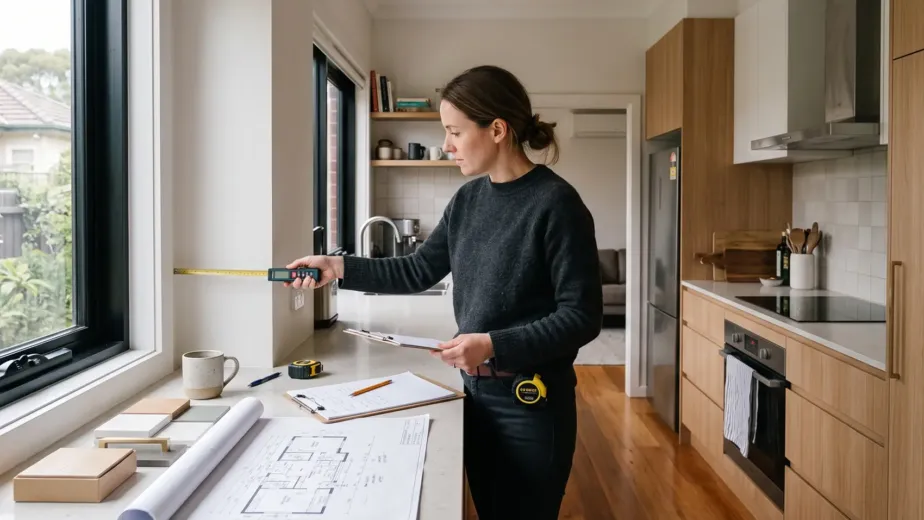
- Site measurement
- Cabinet drawings
- Individual cabinet dimensions
- Material quantities
- Door and drawer-front finishes
- Hinges and drawer runners
- Internal accessories
- Workshop manufacturing
- Edge treatment
- Delivery
- Assembly
- Installation
- Scribing against uneven surfaces
- On-site adjustment
- Coordination with builders, designers or other
- trades
Two projects of the same width may therefore have very different prices.
For example, a three-metre wall of open laminate shelving is not equivalent to a three-metre entertainment unit containing drawers, doors, ventilation, cable management, feature veneer and integrated lighting.
What Is Included in Custom Cabinetry?
Depending on the project, it may include:
- Built-in wardrobes
- Walk-in robe cabinetry
- Home offices
- Study desks and shelving
- TV and entertainment units
- Living-room storage
- Bookcases and library walls
- Bathroom vanities
- Laundry cabinetry
- Mudroom storage
- Window seats
- Entryway cabinetry
- Bar or display cabinetry
- Dining-room storage
- Custom cabinetry around fireplaces
- Connected joinery across several rooms
The exact service varies between custom cabinet makers Melbourne homeowners’ approach. Some quotes may cover supply only, while others include design, delivery and installation.
The Main Factors Affecting Custom Joinery Prices
1. Project size
A larger installation generally uses more board, edging, hardware and labour. However, overall length alone does not determine the price.
- Cabinet height and depth
- Number of separate cabinet boxes
- Quantity of shelves
- Number of doors and drawers
- Full-height panels
- Decorative end panels
- Amount of exposed material
- Access required for manufacturing and installation
A long, simple cabinet can sometimes cost less than a shorter design containing numerous drawers, complex junctions and premium accessories.
2. Cabinet configuration
Internal configuration has a significant influence on the price.
Open shelving is generally simpler than cabinetry containing doors and drawers. Drawers require additional manufacturing, fronts, runners and adjustment. Pull-out storage and other internal mechanisms add further components and installation work.
Cost can increase with:
- Multiple drawer banks
- Internal drawers
- Adjustable shelving
- Pull-out trays
- Shoe storage
- Jewellery organisers
- File storage
- Concealed appliance cabinets
- Integrated waste systems
- Fold-down work surfaces
- Custom-shaped compartments
Before requesting a quote, identify which features provide genuine everyday value. Including every available accessory may make the project more complex without significantly improving how the room works.
3. Material selection
The visible finish and the underlying cabinet substrate both affect the price.
Common options may include:
- Melamine-faced board
- Laminate
- Moisture-resistant MDF
- Painted two-pack finishes
- Timber veneer
- Plywood
- Solid timber details
- Decorative panels
- Glass
- Metal framing or inserts
- Stone or compact surfaces
A standard melamine-faced finish may provide a practical and predictable result. Two-pack painted doors require additional finishing processes. Natural timber veneer may require grain selection, matching and careful handling.
The material must also suit the room. Bathroom and laundry cabinetry needs appropriate moisture consideration, while shelves carrying books, equipment or heavy objects require suitable construction and support.
4. Door and drawer-front style
Flat doors are generally simpler to manufacture than routed, framed or highly detailed profiles.
The cost may be affected by:
- Flat or routed doors
- Shaker-style profiles
- Finger-pull details
- Applied handles
- Push-to-open systems
- Sliding doors
- Glass-fronted doors
- Mirrored doors
- Fluted or decorative panels
- Curved components
- Custom paint colours
- Timber grain alignment
Handle-free cabinetry is not automatically less expensive. The required profiles, hardware or push-to-open systems may create additional manufacturing and adjustment requirements.
5. Hardware
Hinges and drawer runners influence how the cabinetry feels and performs.
A quote may include:
- Standard or soft-close hinges
- Standard or heavy-duty drawer runners
- Full-extension runners
- Push-to-open hardware
- Sliding-door systems
- Lift-up door mechanisms
- Pocket-door hardware
- Adjustable shelf supports
- Wardrobe rails
- Specialised internal storage
The brand, load rating and quantity of hardware can materially affect the final price.
When comparing quotes, ask for the hardware system to be identified rather than accepting a general description such as “premium hardware”.
6. Finish quality and visible detailing
Cabinetry that sits prominently in a living room, entrance or home office may need a higher level of visible detailing than storage inside a garage.
The quote can be influenced by:
- Exposed edges
- Panel junctions
- Shadow lines
- Grain direction
- Door alignment
- Integrated handles
- Scribed wall panels
- Ceiling junctions
- Feature lighting channels
- Colour matching
- Matching of adjacent rooms
- Decorative trims
Seemingly small visual details often require additional design, manufacturing and installation time.
7. Site conditions
Made-to-measure cabinets Melbourne homeowners order must respond to the actual property.
Site conditions that may affect the cost include:
- Uneven walls
- Sloping floors
- Out-of-square corners
- High ceilings
- Period-home details
- Existing skirting boards or cornices
- Bulkheads
- Fireplaces
- Structural columns
- Restricted installation areas
- Existing electrical or plumbing services
Custom cabinetry can be designed around these conditions, but difficult junctions and extensive scribing require more planning and site work.
8. Delivery and installation access
Access can affect delivery time and the size of components that can be transported into the room.
Tell the cabinet maker if the property has:
- Stairs
- Narrow hallways
- Small lifts
- Limited parking
- Restricted loading access
- Apartment work-hour rules
- Owners corporation requirements
- Long travel distances from the vehicle
- Limited space for tools or component storage
- Occupants remaining in the home during installation
Large cabinets may need to be manufactured in sections when access is restricted.
9. Electrical, plumbing and other trade requirements
Cabinet makers do not necessarily complete licensed electrical or plumbing work.
Additional trades may be required for:
- Integrated cabinet lighting
- Power points
- Television and data connections
- Cable routing
- Wall-mounted screens
- Vanity plumbing
- Laundry plumbing
- Sink installation
- Appliance connections
- Heating or ventilation requirements
Confirm whether these services are included, coordinated or excluded from the cabinetry quote.
10. Design complexity and revision time
A straightforward brief supported by measurements and inspiration images can generally be developed more efficiently than an unresolved design requiring numerous revisions.
Complexity may increase when the project includes:
- Several connected rooms
- Curved forms
- Unusual materials
- Detailed architectural drawings
- Integrated lighting
- Concealed doors
- Complex appliance integration
- Precisely aligned feature panels
- Multiple colour or finish combinations
- Coordination with other custom-built elements
Design time is part of the project, even though it is less visible than the finished cabinetry.
Custom Cabinetry Cost by Project Type
The following scenarios explain how the scope changes from one project to another. They are not fixed packages or Sagar Cabinets quotations.
Scenario 1: Custom Home Office
A custom home office may include a built-in desk, drawers, overhead storage, bookshelves and cable access.
A simple home office may use:
- A laminate work surface
- One drawer unit
- Open shelving
- A limited number of overhead cabinets
- Standard hardware
- Straightforward wall-to-wall installation
A more complex home office may include:
- Two workstations
- Full-height storage
- File drawers
- Printer storage
- Integrated lighting
- Cable management
- Feature veneer
- Two-pack doors
- Floating shelves
- Acoustic or decorative panels
A small home office may fall within a broad planning range of approximately $4,000 to $10,000+, while a full-room installation may extend beyond this range.
The main cost drivers are the number of drawers, the length of the work surface, finish type, overhead cabinetry, lighting integration and site access.
Scenario 2: Built-In Wardrobe
Current Australian pricing guides place many built-in wardrobes between approximately $1,110 and $3,010+ per linear metre, including labour and materials, depending on the specification. Melbourne project estimates also show that basic built-ins, premium wardrobes and walk-in robes can occupy very different price categories.
A basic wardrobe may contain:
- Hanging rails
- Adjustable shelves
- A simple internal finish
- Hinged or sliding doors
- Standard hardware
A higher-specification wardrobe may contain:
- Internal drawers
- Shoe storage
- Jewellery compartments
- Glass shelves
- Integrated lighting
- Mirrored or decorative doors
- Feature finishes
- Floor-to-ceiling panels
- Detailed corner configurations
A straightforward built-in wardrobe may broadly fall between $3,000 and $8,000+. A larger wardrobe or walk-in installation may range from approximately $8,000 to $15,000+, depending on its dimensions and specification.
The number of drawers and specialised accessories can have as much influence on the price as the overall wardrobe width.
Scenario 3: TV and Entertainment Unit
A custom TV unit can range from a low storage cabinet to a full-wall architectural feature.
A simpler design may include:
- Low cabinets
- Hinged doors
- Open equipment shelves
- Cable openings
- A laminate finish
A full-wall design may include:
- Floor-to-ceiling cabinetry
- Bookshelves
- Display niches
- Drawers
- Concealed equipment storage
- Integrated lighting
- Decorative wall panels
- A floating appearance
- A fireplace surround
- Timber veneer or two-pack finishes
A compact TV unit may begin within a broad planning range of approximately $5,000 to $10,000+. A detailed full-wall installation may reach $10,000 to $18,000+, with premium architectural designs potentially exceeding this range.
Television brackets, electrical work, fireplaces, data connections and wall reinforcement may be quoted separately.
Scenario 4: Custom Bathroom Vanity
A custom vanity must be designed around the bathroom layout, basin, plumbing and selected surface.
The cabinetry component may include:
Vanity carcass
Doors or drawers
End panels
Hardware
Internal storage
Moisture-appropriate materials
Installation
The wider vanity project may also require:
Stone or another benchtop
Basin
Tapware
Plumbing
Electrical work
Mirror cabinet
Splashback or tiling
Wall preparation
A compact custom vanity may fall within a broad cabinetry planning range of approximately $2,500 to $7,500+. Larger double vanities, premium finishes and connected tall storage may cost more.
When comparing prices, check whether the basin, benchtop, mirror, tapware and installation are included.
Scenario 5: Full-Wall Library or Display Cabinetry
A library wall may look visually simple, but shelf strength, vertical alignment, wall fixing and installation accuracy require careful planning.
Costs may increase with:
Floor-to-ceiling construction
Adjustable shelves
Large unsupported shelf spans
Integrated ladders
Cabinet lighting
Glass doors
Drawers
Feature veneer
Fireplace integration
Air-conditioning or service coordination
Complex installation access
A substantial library or display wall may broadly fall between $10,000 and $25,000+.
The final price depends heavily on the wall dimensions, material, number of enclosed cabinets and architectural detailing.
Scenario 6: Whole-Room or Whole-Home Joinery
Whole-home joinery may include several areas, such as:
Entry storage
Living-room cabinetry
Home office
Bedroom wardrobes
Bathroom vanities
Laundry cabinetry
Mudroom storage
Hallway cabinets
Bar or display joinery
A multi-room project can create design consistency and may allow measurements, material orders, manufacturing and installation to be coordinated as one programme.
However, it should not be assumed that ordering several rooms automatically produces a low per-room cost. Large projects require more design, material, manufacturing, transport and installation resources.
Depending on the number of rooms and specification, a whole-home project may range from approximately $25,000 to more than $100,000.
A meaningful budget can only be prepared after each area has been measured and scoped.
Is Built-In Cabinetry More Expensive Than Freestanding Furniture?
Built-in cabinetry is generally more expensive than mass-produced freestanding furniture because it is designed for a specific space and usually includes individual measurement, manufacturing and installation.
The comparison should consider more than the purchase price.
Freestanding furniture can offer:
A lower initial cost
Faster availability
The ability to move the item
Easier replacement
A clear retail price
No installation in many cases
Built-in cabinetry can offer:
Better use of wall height
Fewer unused gaps
Storage designed for specific belongings
Integration with the room
Greater control over materials and finishes
A more permanent installation
Solutions for awkward dimensions
Better alignment with adjacent architecture
Built-in cabinetry is not automatically the right choice for every room. Freestanding furniture may be more practical for renters, temporary rooms, frequently changing needs or limited budgets.
The value of built-in cabinetry is strongest when the room requires efficient use of space or the homeowner needs a solution that standard furniture cannot provide.
How Materials Change the Budget
Material selection should reflect appearance, use, maintenance and budget.
Melamine-faced board
Melamine-faced board can provide a practical surface with a wide range of colours and timber-look options. It may suit wardrobe interiors, home offices, laundries and everyday storage.
Its predictable finish and relatively straightforward manufacturing can make it suitable for cost-conscious custom projects.
Laminate
Laminate provides a durable decorative surface and is available in numerous colours and textures. It may be used for doors, panels, work surfaces and feature elements.
Price varies according to the selected product, substrate and edge treatment.
Two-pack painted cabinetry
Two-pack allows greater colour flexibility and can be applied to flat or routed doors. It generally involves more finishing work than standard melamine-faced cabinetry.
The price may increase with custom colours, detailed profiles, complex panels and a high level of visible finishing.
Timber veneer
Timber veneer introduces natural grain and variation. It may be used across the complete installation or reserved for feature areas.
Costs can be affected by species, grade, grain direction, matching requirements, clear coating and the quantity of exposed surfaces.
Solid timber
Solid timber may be used for selected trims, doors, frames or feature components. Movement, grain variation, finishing and construction requirements must be considered.
Using solid timber selectively can provide a natural detail without requiring the entire project to be made from the same material.
Why Price Per Linear Metre Can Be Misleading
Linear-metre pricing can help with early budgeting, but it does not represent every component accurately.
One metre of open shelving may contain:
- A carcass
- A few shelves
- Basic edge treatment
One metre of drawer cabinetry may contain:
- A carcass
- Several drawer boxes
- Multiple fronts
- High-quality runners
- Handles or opening hardware
- More manufacturing and adjustment
Both occupy the same wall length, but their costs are different.
Linear-metre estimates should therefore be treated as an initial reference rather than a replacement for a detailed joinery quote Melbourne homeowners can review line by line.
Does a Custom Cabinetry Quote Include Installation?
Sometimes, but not always.
A quote may be structured as:
- Design and supply only
- Supply and delivery
- Supply and installation
- A complete service including design,
- measurement, manufacture, delivery and installation
Ask the cabinet maker to confirm whether the quotation includes:
- Initial consultation
- Site measurement
- Drawings
- Material samples
- Manufacturing
- Hardware
- Delivery
- Assembly
- Installation
- Scribing and fillers
- Final adjustment
- Site protection
- Removal of packaging
- GST
Also confirm whether demolition, wall repair, painting, electrical work, plumbing and waste removal are excluded.
What Should Be Included in a Custom Joinery Quote?
A useful quote should describe what is being supplied rather than showing only a total price.
Look for:
Project scope
- Rooms included
- Cabinet locations
- Approximate dimensions
- Number and type of cabinets
- Design or drawing inclusions
Materials
- Carcass material
- Door and drawer-front material
- Visible panel finish
- Internal finish
- Edge treatment
- Feature material
Hardware
- Hinge system
- Drawer runners
- Handles or opening system
- Wardrobe rails
- Sliding hardware
- Internal accessories
Service inclusions
- Site measurement
- Design
- Manufacturing
- Delivery
- Installation
- Final adjustment
Commercial details
- GST treatment
- Payment stages
- Estimated programme
- Quote validity
- Warranty
- Exclusions
- Items supplied by the client
- Items completed by other trades
If an allowance has been used for an undecided material or feature, it should be clearly identified.
How to Compare Custom Cabinetry Quotes
Prices should be compared on the same scope and specification.
| Quote area | What to compare |
|---|---|
| Cabinet dimensions | Are both quotes based on the same layout and room measurements? |
| Materials | Are the substrate, visible finish and edge treatment identified? |
| Drawers and doors | Do both proposals include the same quantity and configuration? |
| Hardware | Are the hinge and runner brands or specifications comparable? |
| Internal features | Are organisers, rails, pull-outs and lighting included? |
| Design | Are consultation, drawings and revisions included? |
| Delivery | Is delivery included for the actual project location? |
| Installation | Are scribing, fillers, fixing and final adjustments covered? |
| Other trades | Are electrical, plumbing and painting responsibilities clear? |
| GST | Are all prices being compared on the same GST basis? |
| Warranty | What materials and workmanship are covered? |
| Exclusions | What additional costs remain outside the quote? |
A lower quotation may simply contain fewer drawers, lower-cost hardware, a different finish or no installation.
Request clarification before changing the design purely to match a headline price.
How Can I Budget for Whole-Home Joinery?
Whole-home joinery is easier to budget when each area is listed separately.
- Record every area being considered.
- Identify the main function of each cabinet.
- Measure the approximate available space.
- Separate essential storage from optional features.
- Choose a general finish level.
- List internal accessories.
- Identify electrical or plumbing requirements.
- Confirm whether installation is required.
- Allow for work by other trades.
- Add a contingency for unresolved site conditions.
A planning table can help:
| Area | Essential scope | Optional upgrade |
|---|---|---|
| Entry | Shoe storage, hanging and shelf | Upholstered seat and feature panels |
| Living room | TV storage and cable access | Display shelving and integrated lighting |
| Home office | Desk, drawers and shelving | Full-height storage and feature veneer |
| Bedroom | Hanging, shelves and drawers | Lighting, mirrors and accessories |
| Bathroom | Vanity storage | Tall cabinet and mirror cabinetry |
| Laundry | Base and overhead cabinets | Pull-out hamper and drying storage |
Practical Ways to Manage the Custom Storage Budget
Reducing cost does not always require replacing custom cabinetry with standard furniture. The design and specification can be adjusted strategically.
Prioritise high-use areas
Invest in drawers, hardware and durable finishes where they will be used every day. Simpler shelving may be sufficient in occasional-use areas.
Limit unnecessary material changes
Using a consistent finish across several rooms can simplify selection and manufacturing. Feature materials can be reserved for visible areas.
Combine open and closed storage
Open shelving uses fewer doors and hinges, although it requires more frequent dusting and visual organisation. Combining it with enclosed storage can balance cost and practicality.
Use premium finishes selectively
Timber veneer or two-pack may be applied to doors or feature panels while more practical materials are used inside cabinets.
Finalise the design before production
Late changes can affect drawings, material orders and manufacturing. Confirm dimensions, finishes, hardware and service requirements before approving production.
Separate essentials from future additions
Some internal organisers may be added later if the cabinet construction allows for them. Discuss future compatibility during design.
Keep trade responsibilities clear
Unexpected costs often arise when electrical work, wall preparation, painting or plumbing was assumed to be included but was not documented.
Information to Prepare Before Requesting a Quote
To receive a more useful early estimate, provide:
- Project address and suburb
- Rooms requiring cabinetry
- Photographs of each area
- Preliminary measurements
- Floor plans, if available
- Inspiration images
- Preferred materials or colours
- Storage requirements
- Appliance or equipment dimensions
- Internal accessory preferences
- Required installation service
- Preferred project timing
- Approximate working budget
- Site-access information
- Details of builders, designers or other trades involved
Homeowner measurements can support the initial discussion, but final manufacturing should rely on verified project information and an agreed measurement process.
Common Custom Cabinetry Budgeting Mistakes
Comparing a retail unit with an installed custom project
The retail price of freestanding furniture does not include site measurement, individual design, made-to-measure manufacturing or installation.
Budgeting only by wall length
Drawers, doors, finishes, hardware and internal features can make two equally sized projects cost very different amounts.
Leaving hardware unspecified
A quote describing only “soft-close hardware” may not provide enough information for an accurate comparison.
Assuming installation is included
Supply-only and fully installed quotes should not be compared as if they cover the same service.
Forgetting related trades
Electrical work, plumbing, plastering, painting, stone and structural work may sit outside the cabinetry contract.
Selecting the visual finish before planning storage
A successful project must first accommodate the items being stored and the way the room is used.
Treating an online estimate as a quotation
Online ranges are useful for initial planning, but they cannot account for exact measurements, project specifications or site conditions.
Is Custom Cabinetry Worth the Cost?
Custom cabinetry may be worthwhile when it solves a genuine spatial or functional problem.
It can be particularly useful when:
- Standard furniture leaves significant unused space
- The room has unusual dimensions
- Floor-to-ceiling storage is required
- Several functions must fit within one wall
- Equipment or appliances need to be integrated
- The homeowner wants consistent joinery across multiple rooms
- The property has difficult architectural features
- Long-term storage requirements are clearly understood
It may be less appropriate when the room is temporary, the storage requirements are likely to change soon or suitable freestanding furniture already exists.
The decision should be based on fit, usability, material specification, installation quality and how long the solution is expected to remain useful.
Planning Bespoke Cabinetry in Melbourne
Sagar Cabinets designs and manufactures custom joinery for homes and projects across Melbourne and Victoria. Possible applications include wardrobes, vanities, home offices, entertainment units, display cabinetry and storage designed for specific rooms.
A project can begin with photographs, preliminary dimensions, a floor plan and a clear description of what needs to be stored. Materials, hardware, design details and installation requirements can then be developed before a project-specific quotation is prepared.
Homeowners should use the pricing information in this guide only as an initial budgeting reference. Current material costs, supplier pricing, project requirements and production conditions can change.
For an accurate figure, request a written quote based on confirmed scope, dimensions, materials and installation requirements.
Frequently Asked Questions
How much does custom cabinetry cost in Melbourne?
- Current online references suggest many individual Melbourne custom joinery projects may range from approximately $4,750 to $23,750. Smaller vanities or wardrobes may fall outside this range, while full-room and whole-home projects can cost significantly more. The final amount depends on dimensions, materials, hardware, design complexity and installation.
What factors affect custom joinery prices?
- The main factors include cabinet size, configuration, number of drawers, material selection, door finish, hardware, internal accessories, design complexity, site conditions, access, delivery and installation. Electrical, plumbing and other trade work may create additional costs.
Is built-in cabinetry more expensive than freestanding furniture?
- Built-in cabinetry is generally more expensive than mass-produced freestanding furniture because it is measured, designed, manufactured and installed for a specific space. It may provide better use of wall height, awkward areas and room-specific storage.
Does a custom cabinetry quote include installation?
- Not automatically. Some quotes cover supply only, while others include design, measurement, delivery and installation. Ask for each inclusion and exclusion to be stated in writing.
How can I budget for whole-home joinery?
- List every room separately, identify essential storage, choose a broad finish level and separate optional upgrades. Include installation, delivery, other trades and a contingency for unresolved site conditions. A whole-home quotation should show enough detail to understand the cost of each area.
How much does a built-in wardrobe cost in Melbourne?
- A straightforward built-in wardrobe may broadly cost approximately $3,000 to $8,000+, while larger or premium walk-in installations may range from $8,000 to $15,000+ or more. Width, internal drawers, door style, lighting, accessories and finish all affect the price.
How much does a custom TV unit cost?
- A compact custom entertainment unit may broadly range from $5,000 to $10,000+, while a detailed floor-to-ceiling installation may range from $10,000 to $18,000+ or more. Electrical work, fireplaces, television mounting and data connections may be separate.
Is custom cabinetry priced per linear metre?
- Some suppliers use linear-metre rates for initial budgeting, but the method has limitations. A metre of open shelving is not equivalent to a metre containing drawers, doors, premium hardware and specialised finishes. A detailed project quote is more reliable.
Pricing Disclaimer
All prices in this guide are broad market estimates for preliminary planning only. They are not fixed prices, offers or quotations from Sagar Cabinets. Actual costs vary according to project scope, dimensions, materials, hardware, site conditions, access, delivery, installation and market conditions.
Sagar Cabinets should confirm all figures and service inclusions before publication. Homeowners should obtain a current written quotation for their individual project.